




Bwindi Impenetrable National Park
Bwindi Impenetrable National Park (Bwindi Forest National Park) is a typical tropical rain forest with an annual mean temperature range of a minimum of 7–15°C to a maximum of 20–27°C. Its annual rainfall ranges from 1,400 to 1,900 millimeters. The heavy rains climax from March to April and from September to November.
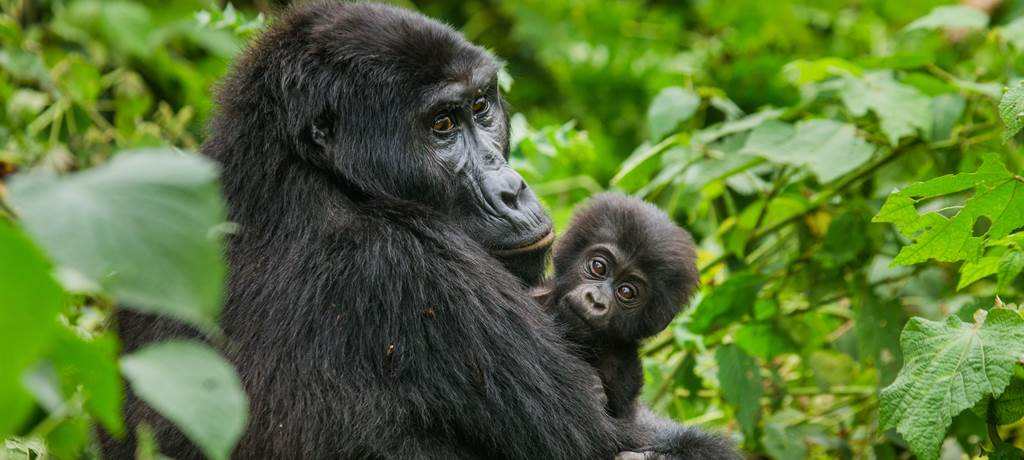
Bwindi Impenetrable Forest became popular to the world because of Gorilla trekking! It is a habitat for more than half of the world’s remaining Mountain Gorilla population. These gentle primates are a highly endangered species, and the forest possesses more than 360 individuals of the approximately 800 in the entire world. They are highly endangered because of poaching, habitat loss, and diseases. This national park generates one of the highest revenues for Uganda Wildlife Authority amongst all the safari parks in Uganda.
Bwindi is located in the southwestern region, on the edge of the rift valley. Commonly referred to as the impenetrable forest, Bwindi Impenetrable National Park is bordered by the Democratic Republic of Congo (DRC) on the western side; Kabale town to the southeast is the nearest main town to the park, 29 kilometers away by road.
It covers an area of 331 square kilometers and is located in the highest parts of the Kigezi highlands, with an altitude of 1,190 to 2,607 meters above sea level, and 60% of this magical park has an elevation of over 2,000 meters above sea level. The highest elevation in the park is Rwamunyonyi hill at the eastern edge, and the lowest part of the park is located at its northernmost tip.
Bwindi Forest National Park is approximately an 8-hour or 9-hour drive from Entebbe by road and just 1 hour away by chartered flights. Usually, the first and last days of Uganda gorilla tours are reserved solely for traveling and a few other minor activities along the way. The journey is quite long, especially when you are traveling by road, but definitely worth it when you experience a close encounter with the mountain gorillas in the forests.
There is just a lot behind this destination, appearing among the most visited Uganda safari parks, and I am sure you will see it when you travel. Please check out the list of recommended gorilla safari companies that can organize exceptional safari expeditions in the wilderness of Bwindi Impenetrable National Park. You can also browse through some of our most popular safari packages below;
Safari Packages to Bwindi Forest National Park



Activities in Bwindi
Gorilla Trekking
Gorilla Trekking is an adventure activity where a group of 8 people gets to hike/trek through the thick forests, accompanied by park rangers and porters, to see habituated mountain Gorillas in their natural environment – wild and untamed, freely going about their daily routine.
Bwindi Forest National Park currently has six gorilla trekking sectors: Buhoma, Nkuringo, Ruhija, Rushaga, Nyundo, and Rubugiri, with Buhoma and Nkuringo being among the most visited sectors. The park’s proximity to the border of Rwanda has long allowed tourists to combine Uganda and Rwanda gorilla trekking experiences in a single itinerary. These trips can start from either country, depending on the client’s preference, making it possible to do gorilla trekking in Bwindi from Rwanda—about a 4- to 5-hour drive from Kigali.
When is the best time to trek Gorillas in Uganda?
The best time to visit the mountain Gorillas in Uganda is mid-June through September, and December through February. This period is the busiest and best time of the year. These are dry months of the year, and the high season or peak season for Gorilla Trekking. Though mountain Gorillas can be trekked all year long in Uganda, with no seasonal closures.
Gorilla Habituation Experience
Gorilla habituation experience in Bwindi refers to a gorilla watching adventure where only 4 visitors head into the forest in the company of ranger guides, porters, and researchers, to meet a group of semi-habituated Gorillas in their natural environment and spend 4 hours with them.
Gorilla habituation is the process through which mountain gorillas are trained to get used to human presence within their environment. This is an intimate process, and that is why only a few visitors are allowed to experience it per day, because the gorilla family you get to visit is still undergoing the habituation process, thus, not ready to be visited by many people, which could irritate them and cause aggression.
The habituation experience in Uganda takes place only in the Rushaga sector, which is south of Bwindi Impenetrable Forest National Park, and the best time to visit is from June to September and December to March.
Bird Watching/Birding in Bwindi
Bwindi National Park is home to over 320 bird species and 23 species. The bird species include Western Green Tinkerbird, African Wood Owl, Archer’s Robin-Chat, Red-throated Alethe, Fine-banded Woodpecker, Grauer’s Rush Warbler, Handsome Francolin, Chestnut-throated Apalis, Regal Sunbird, Collared Apalis, Montana Oriole, and Short-tailed Warbler, Kivu Ground-Thrush, Chapin’s Flycatcher and African Green Broadbill, and Green-breasted Pitta, African Green Broadbill, Great Blue Turaco, Shelley’s Crimsonwing, Standard-winged Nightjar, flycatcher, Short-tailed Warbler, Doherty’s Bush shrike, Bar-tailed Trogon, Black-breasted Barbet, and many more.
Getting to Bwindi
Bwindi Forest National Park is located about 478 kilometers from the capital city, Kampala, and can take between 7 and 8 hours of driving. The journey is mostly on a smooth surface and a dirt murram road for the last part into the forest. Bwindi National Park can also be accessed from Queen Elizabeth National Park, driving through the Ishasha sector in 3 to 4 hours.
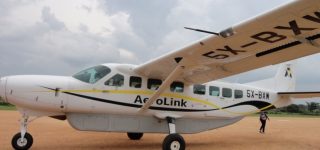
Daily buses operate from Kampala to Kabale, Kisoro, and Rukungiri via Kihihi. From those towns, you can easily connect to Bwindi National Park or arrange with a local guide to pick you up. The park can also be accessed by air, flying from Entebbe airport to Kihihi or Kisoro airstrip on a domestic flight. Aero Link is a domestic operator with scheduled daily flights to Kisoro (only in the morning) and the Kihihi airstrip of Bwindi.
Below are the flight schedules and times;
|
From |
To |
Depart |
Arrive |
|
Entebbe |
Kisoro |
07:45 AM |
08:55 AM |
|
Kisoro |
Entebbe |
09:10 AM |
11:25 AM |
|
Entebbe |
Kihihi |
07:00 AM |
08:45 AM |
|
Kihihi |
Entebbe |
09:45 AM |
11:25 AM |
|
Entebbe |
Kihihi |
12:45 PM |
01:55 PM |
|
Kihihi |
Entebbe |
12:45 PM |
03:55 PM |
Those who may want to fly into Buhoma may take on the charter planes and land at Kayonza airstrip.
Gorilla Families
Habituated gorilla families live in social groups known as families in the different sectors of Bwindi. The park is geographically humongous and thus, divided into sectors: Northern, Eastern, and Southern sectors. These are the 3 major sectors of Bwindi, where mountain gorilla trekking takes place. Each sector has different gorilla families, and each family is led by a male Silverback, who is the family head with autonomous breeding rights and protector of the group. We provide you with a complete list of gorilla families in Bwindi Impenetrable National Park.
Attractions in Bwindi Impenetrable National Park
Bwindi Impenetrable National Park is ranked as one of the top tourist destinations in the world, the reason being that the park consists of many attractive tourist attractions. These tourist attractions include;
Mountain gorillas
Mountain Gorillas are the star attraction of Bwindi Impenetrable National Park, and trekking to see these primates in their natural home is the number one objective for all visitors to this park. It is estimated that more than 500 individuals inhabit the different sectors of Bwindi.
Buhoma Sector
The Buhoma sector is located in the northern region of Bwindi Impenetrable National Park. It is the most developed of all sectors with a bigger town and infrastructure, because this was the inaugural sector for gorilla trekking in Uganda. Mubare gorilla family in Buhoma was the 1st to be habituated in 1992, and gorilla trekking began in 1993 for the public! The gorilla families in Buhoma are;
- Mubare gorilla family: The Mubare gorilla family is the first gorilla family to be open for gorilla trekking in 1993, and presently consists of 5 individuals. It was named after the Mubare hills, where this group was first sighted. The Mubare gorilla family is headed by Kanyonyi, a dominant silverback with 1 adult female, 2 sub-adult females, and 1 infant.
- Habinyanja gorilla family: Habinyanja gorilla family derived its name from a Rukinga word Nyaja, meaning a place with water, and was habituated in 1997 and first trekked in 1999. This family was first sighted near the swamp ponds of Bwindi Impenetrable National Park. Habinyanja gorilla family consists of 13 prominent family members, namely Makara, Rwansigazi, Maraya, Kisho, Nabukye, Binyonko, Rugyendi, Nyamuhango, Elsa, Hamusini, Hakato, Gacyaro, and Bangenyi. This family is under the leadership of Makara, a dominant silverback.
- Rushegura gorilla family: The Rushegura gorilla family was habituated in 2000 and opened for trekking in the same year. This group split from the Habinyanja gorilla family. This family consists of 19 gorilla individuals, and when you trek in this family, you can get a sight of Mwirima, the dominant silverback and leader of this group, Kabukojo the blackback, 5 adult females that are Kyirinvi, Kibande, Buzinza, Nyamunwa, and Karungyi, 2 sub-adult females Kalembezi and Ruterana, 5 juveniles that are Nyampazi, Kafuruka, Kibande, Karungyi, and Kanywanyi, 5 infant gorillas that are Kyirinvi, Buzinza, Nyamunwa, Kibade, and Katabazi.
The Buhoma sector is very accessible using routes from Kabale, using Kihihi airstrip, and from Queen Elizabeth National Park, as it is close to the Ishasha sector, the southern part of Queen Elizabeth National Park.
NKURINGO SECTOR
Nkuringo gorilla sector is situated in the southern part of Kisoro district. Nkuringo sector is a home to only three gorilla families, which are;
- Nkuringo gorilla family: The Nkuringo gorilla family is the first gorilla group habituated in the south-western region of Bwindi, and it was opened in 1997. The Nkuringo gorilla family is composed of 12 gorilla individuals, including 1 silverback, 2 adult females, 2 sub-adults, 2 sub adults 3 juveniles, and 2 infants.
The Nkuringo gorilla family is historic as it is the first family in Bwindi to record the birth of twins. The Nkuringo gorilla family initially was made up of 17 individuals, but many members split, and only 12 were left in this family group.
- Bikingi gorilla family: The Bikingi gorilla family is a fantastic gorilla family exclusive for the gorilla habituation experience. This family was habituated as early as 2012. Currently, this family consists of 15 family individuals, that is, 1 silverback, 5 adult females, 2 sub-adults, 2 juveniles, and 5 infants. Bikingi gorilla family doesn’t have a leader yet because it is still undergoing the habituation process.
- Bushaho gorilla family: Bushaho gorilla family is a group of 8 individuals with 1 silverback, 1 blackback, 3 adult females, 1 sub-adult, 1 juvenile, and 1 infant. The Bushaho gorilla family was formed by numerous members who split from the Nkuringo gorilla family. This family is under the leadership of a dominant silverback, Bahati.

RUSHAGA SECTOR
Rushaga sector is the most visited sector in Bwindi Impenetrable National Park by tourists coming from Kigali using the Cyanika border in Kisoro district. This region is also situated in the southern region of the park. Rushaga sector hosts the largest number of mountain gorilla families in the park, and they include;
- Nshongi gorilla family: The Nshongi gorilla family is an exciting one. It consists of 7 family members under the leadership of Bweza, a powerful silverback. There is 1 silverback, 1 juvenile, 1 infant, 3 adult females, and 1 sub-adult.
- Kahungye gorilla family: Kahungye gorilla family is a family of 17 members deriving its name from Kahungye Hill, where these gorillas were first sighted in this region. This family is under the leadership of a dominant silverback, Rumaz, with 3 adult females, 3 silverbacks, 2 infants, 3 juveniles, and 3 sub-adults.
- Busingye gorilla family: The Busingye gorilla family is a family of 9 members that broke away from Kahungye. It is under the leadership of the dominating silverback Busingye. This group derives its name from a local word meaning peace.
- Mishaya gorilla family: Mishaya gorilla family is a group of 12 members under the leadership of a dominant silverback, Mishaya. The group was formed in 2010 by Mishaya, who broke away from the Nshongi group.
- Bweza gorilla family: The Bweza gorilla family is a family of 23 mountain gorilla individuals under the leadership of a silverback in the name of kakono. This family consists of 2 silverbacks, 4 blackbacks, 1 sub-adult, 3 adult females, and 2 infants.
RUHIJA SECTOR
The Ruhija sector is found in the eastern region of Bwindi Impenetrable National Park. Ruhija is an amazing sector consisting of 3 gorilla families where mountain gorilla trekking takes place. These families include;
- Bitukura gorilla family
Bitukura gorilla family is a family of 14 individuals with 4 silverbacks, 4 adult females, 2 juveniles, 3 infants, and 1 baby. This family was habituated in 2007, and it initially consisted of 24 members. Recently, the group faced constant conflicts, which caused many members to run away from the group.
- Oruzogo gorilla family
The Oruzogo gorilla family is a family of 17 individuals with 1 silverback. This family was opened for tourism in 2007, and some of the prominent members of this group include Bakwate “old silverback”, Kaganga (silverback), Kasumali (silverback), six adult females whose names include Nyangaro, Katoto, Ruchura, Mutesi, Nyakina, and Mukwano, one black back Bwengye, three sub-adult males Nyakashunja, Musenene, Nyabirano, and Muhumuza, two infant males Mufuruki and Paska, and one infant female Musana.
- Kyaguliro gorilla family
The Kyaguliro family is a relatively big family of 20 individuals. This family was reserved for research, which is why it is not occasionally visited. After the death of the group’s then-leader, who was struck dead by lightning, the group split into two groups, Kyaguliro A and B.
Kyaguliro A– consists of 10 family members, that is, 1 silverback, 2 blackbacks, 3 adult females, 2 juveniles, and 2 infants under the leadership of Rukara, a dominant silverback.
Kyaguliro B– consists of 10 family members, that is, 1 silverback, 4 adult females, 1 adult, and 4 infants under the leadership of Mukiza, a dominant silverback.
Mammals and other primates
Although the forest is known to be home to mountain gorillas, the park is also home to amazing mammals that inhabit the deep forests of the park. Mammals found in the park include forest elephants, giant forest hog, antelopes, side-striped jackal, African civet, and many more.
There are also other primates that are inhabitants of Bwindi Impenetrable National Park. These primates include chimpanzees, black and white colobus monkeys, vervet, L’hoests, De Brazza monkeys, red-tailed monkey, nocturnal potto, and galago species.
Ancient rainforest
Bwindi Impenetrable Forest is a great ecological system covered with numerous types of vegetation on a record Bwindi Park is one of the few areas in Africa covered by tropical forest in that it is where lowland and montane vegetation zones meet. Bwindi is crossed by many small rivers, such as Ivi, Munyaga, Ihihizo, Ishasha, and Ntengyrere, which pour their waters into Lake Edward, making it a renowned water catchment area.
The park is characterized by a canopy of plant species, which include Red stinkwood, Newtonia, Symphonia globulifera, East African yellow wood, and Strombosia scheffleri. Beneath the main forest, there are species like Xymalos, Neoboutonia Macrocalyx, Monospora, Myrianthus holstii, Teclea nobilis, and Allophylus abyssinicus.
It is also covered by afro-montane forests, a rare vegetation type on the African continent with a recorded number of 220 tree species and 100 fern species.
Hiking trails
Several hiking trails in Bwindi lead to numerous parts of the park and attractions, and hiking can be a great way to discover the park and learn about the forest environment with the help of a park ranger. While on a hiking and nature walk expedition in the park, you could undertake one of the following trails;
- River Ivi trail– this trail is the best bird-watching trail, taking you through the escarpment of Nkuringo. While hiking on this trail, it takes 7 hours covering 14 kilometers to finish it.
- Waterfall trail– The waterfall trail is a 4-hour trail to hike leading to the park’s waterfall.
- Habinyanja trail– this trail is a 4-6 hour trail which takes you past the river Munyanga. This trail is most used by tourists after trekking the Habinyanja gorilla family.
- Kashasha River Trail– this trail is a 5-7-hour trail to trek. Kashasha River Trail runs between the Nkuringo and Buhoma sectors of the park.
- Bamboo trail– this trail is an attractive trail to hike for 6 hours, leading towards Rwamunyonyi peak. Bamboo Trail is the best trail for viewing birds.
- Muzabajiro trail– this trail is an exceptional trail offering scenic views of the western rift valley and Virunga. Muzabajiro is a trail of 6 kilometers, and while on it, you encounter beautiful ferns, a variety of bird species, and peaks of the Virunga volcanoes.

Birds
The forest boasts a variety of bird species, most especially water and forest bird species. This park is a perfect spot for montane forest bird watching in Africa. Bwindi is home to over 350 bird species, among which 14 are endemic to Bwindi Impenetrable National Park, and 23 of them are only found in the Albertine rift.
Bird species that are sighted in the thick forests here include Chapin’s flycatcher, Handsome francolin, Rwenzori Batis, Tit Hylia, Strange weaver, Dusky twin-spot, Montane Oriole, Regal sunbird, African wood owl, Bar-tailed trogon, Western green tinkerbird, Black bee-eater, Dwarf honeyguide, Grey gecko-shrike, Kivu ground-thrush, Yellow-sreaked greenbul, Shelly’s greenbul, Red-throated alethe, collared apalis, and Handsome francolin.
The most rewarding trails for bird watching in Bwindi are the Buhoma waterfall trail, Mubwindi swamp trail, and the bamboo zone.

The Batwa pygmy people
The Batwa pygmy people are the ancient inhabitants of Bwindi forests, but during the gazetting of the forest as a protected area, they were forcefully driven out to the outskirts of the park. The Batwa people, regarded as the keepers of the forest, are hunter-gatherers who depend on hunting wild animals and gathering fruits.
Even today, these people still practice their ancient lifestyle. Make it a point to include a visit to the Batwa community for a unique cultural encounter where you will meet these amazing people going on with their day-to-day lives as they have for centuries.
You will witness them building houses using local materials, be introduced to a mock hunting experience, enjoy local dance and drama, and many activities which will blow your mind.

Top gorilla trekking sectors in Bwindi Forest National Park.
What are the chances of seeing Gorillas in Bwindi?
It is almost a given that everyone who successfully undertakes a trek to the Gorillas in Bwindi will see them. Trekking in Bwindi guarantees a 99% chance of seeing the gorillas in one trek. All treks have been successful for the past 2 decades. For the skeptical ones, doing 2 treks guarantees total confidence that you will see the mountain Gorillas here, but it is completely unnecessary unless you intend to visit different groups.
Which is the best sector to go trekking in Bwindi?
There is no single best sector for Gorilla trekking in Bwindi. This is because the treks are all awesome, no matter which sector you visit. But different individuals have different interests and tastes. So, for those looking for ultra-luxury facilities and a more developed area, Buhoma is your best choice, as there are a variety of luxury facilities to choose from.
If you are looking for a real challenge, choose the Nkuringo sector. Other sectors are all fine to visit, and the treks are excellent! Rushaga has more families and thus, more chances of finding a permit at the last minute. The other advantage Rushaga has over other sectors is the possibility of the Gorilla Habituation Experience, which can only be done there.

How to access Bwindi Impenetrable National Park.
Bwindi Forest National Park can pretty much be accessed from any part of Uganda and northern Rwanda. From Kampala, the capital of Uganda, it takes approximately 8 to 9 hours by road driving through the Masaka highway to Mbarara, Kabale, Kisoro, and Kanungu, respectively. This driving time, however, is dependent on the gorilla tracking sector you will be visiting.
Bwindi Impenetrable National Park can also be accessed from Rwanda (Kigali) from various border posts, taking approximately 4 hours to arrive. The time frame is also dependent on the sector one is headed to. Bwindi park can also be accessed by air with flights departing from Entebbe to the various airfields close to Bwindi park, ie, Kihihi airstrip serving both Buhoma and Ruhiija gorilla tracking sector. Another airstrip can be accessed from Kisoro, serving the Rushaga gorilla tracking sector and Nkuringo, and other travel destinations, to mention Mgahinga gorilla national park, still within the confines of Kisoro.
The most recent addition to the flight was the connecting flight from Masai Mara National Reserve to Bwindi Forest National Park by Air Kenya. The recent addition seeks to bridge the gap between travelers who wish to enjoy the wildlife diversity of the Masai Mara, as well as delve into gorilla trekking – one of the most incredible, thrilling, and fascinating activities conducted in Uganda.
Gorilla tracking procedure in Bwindi Impenetrable National Park.
Gorilla trekking in Bwindi and other parks where the activity is conducted has procedures. Depending on your allocated sector where you will be tracking from, you must have a gorilla tracking permit issued by an authority, and in Uganda’s case, it is the Uganda Wildlife Authority. The price of the permits varies depending on the nationality and residential status.
It’s also advisable to look for the services of a trusted tour operator who will take care of securing the permits, assist with all the required logistics, including transportation and accommodation near the tracking point. Upon getting to the park on the date of tracking, it’s a requirement that you get briefed by the park warden and ranger guides on the dos and don’ts of gorilla trekking.
When the briefing is done, you will be grouped into groups of 8 people, and each allocated a particular gorilla family that you will be visiting for that day. Each group will also be allocated a ranger guide to lead it, armed with a rifle for protection against other wild animals – especially the buffalo, and anything else that could compromise your safety while on the trek.
Trekking could take anywhere between 30 minutes and 5 hours to find the Bwindi gorillas, and when that moment comes, everything comes to a standstill! The ranger guide will alert you to wear your face masks and signal you to observe silence. You will then stay in the company of the gorilla family for 1 hour, watching them as they feed, play, groom, and others, putting up a show for the guests. You are required to keep 6 meters between you and the gorillas, but don’t be surprised if it comes inches closer because this is their home and they heed no rules, apart from the Silverback’s command 😊
Cost of Gorilla trekking in Uganda.
When considering the cost of Gorilla trekking in Uganda, note that the gorilla permit costs 800 USD. In the past years, it used to cost 700 USD during the low season; however, after some time, the discounted permits no longer exist. There are 22 gorilla habituated families, and only eight people per gorilla family are allowed to trek the mountain Gorillas every day. Book your gorilla permit three months before travel. The rest of the cost will be determined by the cost of transportation and the level of comfort for your accommodation.
So, your total gorilla trekking cost in Uganda includes the gorilla permit, transportation, and accommodation. Achieve Global Safaris offers budget, mid-range, and luxury options depending on your interests.
What is a Gorilla Permit?
What is a gorilla permit? How do I pay for a gorilla permit? How do I get a gorilla permit? How do I book gorilla permits? How much does it cost to see a mountain gorilla? What is a gorilla permit? These are the most frequently asked gorilla permit questions, by tourists who would like to visit Uganda for a Uganda gorilla safari tour. What is a gorilla permit? A gorilla permit is an essential document that allows any traveler participating in gorilla trekking in Uganda or a gorilla habituation experience in Uganda to encounter the mountain gorillas in their natural habitat. A valid gorilla trekking permit and gorilla habituation permit should be in the possession of any traveler to enjoy gorilla trekking and gorilla habituation experiences, respectively.
How much does it cost to see a mountain gorilla? / How much is the cost of a gorilla permit?
You need to know the cost of a gorilla permit when planning your Uganda safari. The Uganda permit prices tend to change every 3-4 years, but the current rate of a single gorilla trekking permit is $800 for foreign non-residents, $700 for foreign residents, and UGX300,000 for East African citizens, per person per gorilla trek. A gorilla habituation permit, however, costs $1,500 per person for single use. The Uganda permit price or cost is set by the governing and regulatory body, Uganda Revenue Authority (UWA).
What is included in the gorilla permit price?
Most of the time, when entering any national park in Uganda, visitors are required to pay entrance fees to access the park. However, when purchasing a gorilla permit in Uganda, you do not pay entry fees because these are already included in the permit price. This means you will not need to pay entrance fees for Bwindi Impenetrable National Park or Mgahinga Gorilla National Park. The gorilla permit price also covers ranger fees and your one-hour encounter with the mountain gorillas in their natural habitat. Additionally, the permit provides security throughout your visit to Uganda’s gorilla parks.

What is excluded from the gorilla permit price?
To be able to spot the Bwindi Forest National Park, Uganda gorillas, as well as gorillas in Mgahinga Gorilla National Park, one needs a gorilla permit. Travelers should know that gorilla trekking and habituation can be multiple-day activities, though, of course, 1-day Bwindi gorilla safaris are very possible, especially if you are flying to Bwindi Impenetrable National Park or having a Bwindi gorilla safari from Kigali. This therefore means that travelers need to deal with accommodation, transportation, as well as meals, and sometimes even travel insurance, all of which are not catered for on your Uganda gorilla permits.
When can one book a gorilla permit? / How do I book a gorilla permit?
Gorilla permits need to be booked at least 3 months in advance of your travel date. This is because gorilla permits sell out very fast, given gorilla safaris are very much sought after by many travelers looking to encounter the endangered mountain gorillas, our cousins who actually share up to 98% DNA with humans.
To be assured of your gorilla safari, book your gorilla permit early enough to be able to encounter the gorillas on your preferred dates, and in the Bwindi gorilla sector of your choice for those who would choose gorilla trekking in Bwindi Impenetrable National Park over Mgahinga Gorilla National Park. How do I book a gorilla permit, you may be wondering? You book your gorilla permit from the Uganda Wildlife Authority offices in Kampala, online or, better yet, through a trusted tour operator like Achieve Global Safaris, who is on the ground to do the booking on your behalf.
How Long Does Gorilla Trekking Take?
Gorilla trekking is an activity where tourists have a chance to trek through the forest in the wild. Gorilla trekking can be done in Africa in only three countries, including Rwanda, Uganda, and the Democratic Republic of Congo, with Uganda’s Bwindi Impenetrable National Park having the most traffic.
Booking Gorilla Trekking
Booking a gorilla trek requires one to get a gorilla permit, which is a card issued to Gorilla trekkers in the jungle to authorize their access to trek. The trek takes 30 minutes and 7 hours to meet the endangered species, depending on where they last fed and how fast the trekkers pace up. You are given one hour to see the mountain Gorillas as they play, feed, groom each other, and much more.
Gorilla Conservation
The mountain Gorillas are one of the most successfully Conserved species, which have increased from 370 individuals in the early 2000s. However, recently the gorillas have increased to 1063 species inhabiting the area, according to the last Gorilla census in 2018.
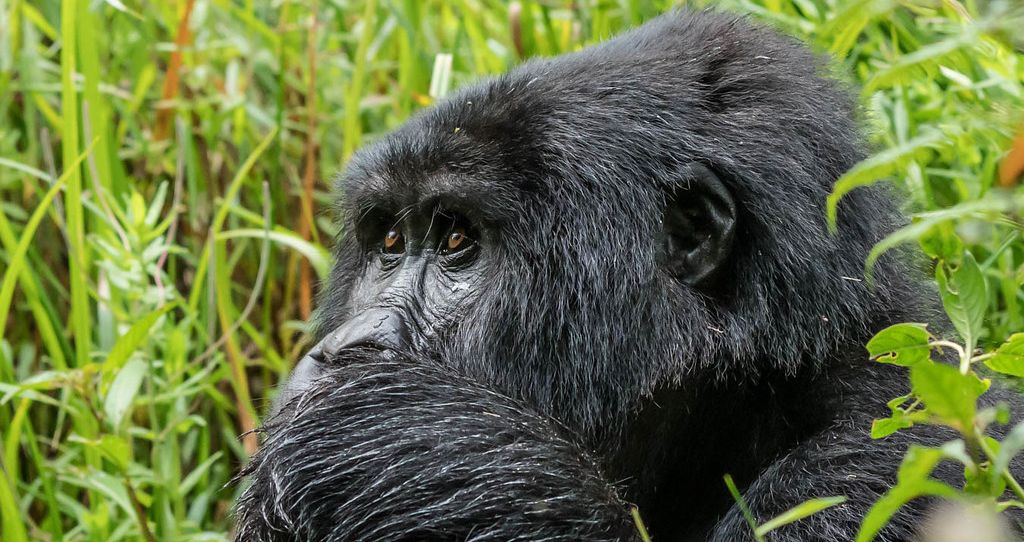
Gorillas start giving birth at the age of 9-12 years, the gestation period takes 9 months, and the baby is weaned at the age of 3-4 years. When the males grow, they are pushed out of the family to create other Gorilla families. At the age of 12years, the males will develop grey hair on their backs – an indicator that they are mature enough to breed and defend their own family.
Uganda conserves two populations, including Mgahinga and Bwindi Impenetrable National Park.
Mountain Gorilla conservation and research activities in the Virunga, Volcanoes in DRC and Rwanda started in the 1970s and 1980s.
In the 1980s, it was discovered that the Bwindi Impenetrable Forest National Park was not only a habitat for the mountain Gorillas but also for many endemic and threatened species. Considering this information, this led to the designation of Bwindi as a park in 1991.
Biking Safaris
Biking is an interesting experience where travelers, instead of using tour cars or walking, travel on bicycles. Bwindi Impenetrable Forest National Park offers biking safaris for its guests.
Bwindi biking safaris through the park give the traveler an amazing view of the park as you enjoy a village bike ride. You also get a chance to spot many bird species, wildlife, butterflies, and primates all on the ride.
Sometimes the bikes are provided by the Organization in the name of Ride 4 a Woman Foundation. Explore the forest as you enjoy the mountain bike. You can ride in a day with a well-informed guide; it’s fun with a guide, and you won’t miss out on anything on the ride.
The guide is well-informed and trained in wildlife species, plant species, birds, and trees of Bwindi Impenetrable Forest. You have the choice of a half-day or full-day riding experience, and it is a great way to spend an extra day in Bwindi after your gorilla trek.
Where to stay
Bwindi National Park has a wide variety of budget, mid-range, and luxury accommodation facilities in each of the 3 sectors. Be sure to visit the accommodations to be able to make a selection of your preferred choice. Some of the accommodation facilities offered around and inside Bwindi Forest National Park are all in budget, mid-range & luxury settings.

Some of the Accommodation Facilities in and around Bwindi Impenetrable Forest National Park
What Safaris Company should one use?
Be sure to choose a genuine safari company that will offer you a wide range of packages to choose from and services that suit your budget and travel style. They should be able to provide you with suitable transportation and guide your trip perfectly.
Safari Packages
There are several safari packages listed here, including 1-day to 3-day typical gorilla safari packages for those who are only interested in seeing just the Gorillas. More packages combine trekking to the gorillas with game viewing, boat safari, Chimpanzee tracking, and more. Trips range from 5 days to 15 days long, including combined tours to the rest of East Africa.
We have made an effort to create something for everyone, and if you cannot find a safari package that suits your interests here, kindly reach out to us, and we will create one for you!
Bwindi forest plays a key role in regulating the environment and climate. Bwindi National Park was designated as a national park in 1991, and in 1994, it was listed as a UNESCO World Heritage Site because of its ecological importance. A 10-square-kilometer area was incorporated into the park.